


Apr 28, 2026
Quantum Computers — Theory and Experiment
Location:
Novi Sad, Serbia
Time:
Apr 28, 2026
14:00 (GMT+01:00)
Audience:
- General public
- Industry
- General public, students
- Physicists and physics students
- Scientists and science students
Organiser:
Departman za fiziku, Prirodno-matematički fakultet
Type of event:
In-person event
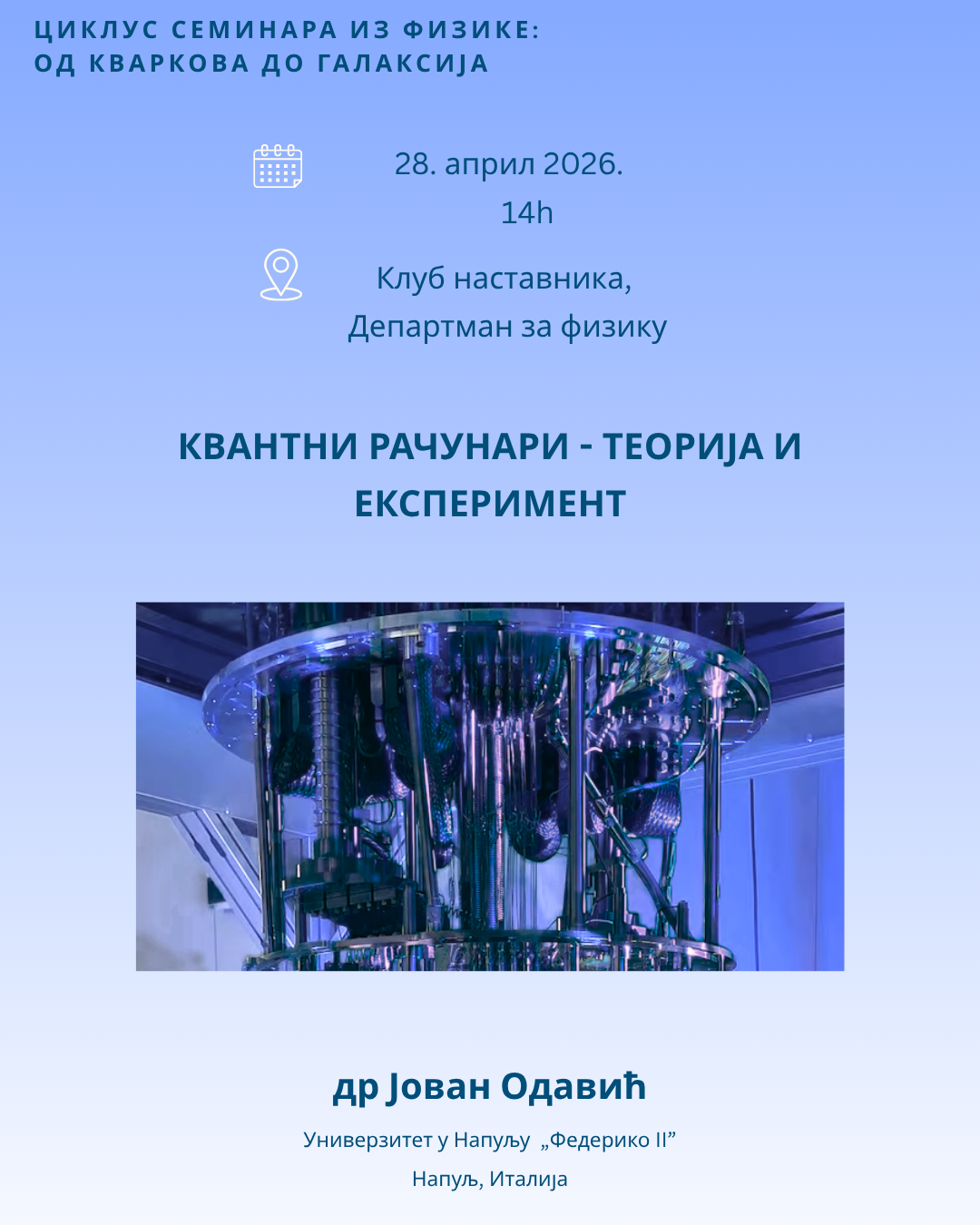
In this lecture, the fundamentals of quantum computing will be presented, along with the results of the first experimental demonstration of “non-local magic” on a quantum processor. Magic, also known as “non-stabilizerness,” is a fundamental non-classical resource that enables universal quantum computation. Understanding how magic is generated, distributed, and erased is essential for the development of efficient and scalable quantum computers that are resilient to environmental influences. Quantum computers are devices that typically require extreme physical operating conditions, such as very low temperatures.
The advantage of quantum computers over classical ones arises only when entanglement and magic coexist; moreover, entanglement can also enhance magic as a resource. Non-local magic is immune to local unitary operations and is catalyzed by entanglement. Direct access to quantum hardware at the University of Naples allowed us to identify and characterize the dominant negative effects inherent to the device itself due to its interaction with room-temperature components.
The lecture will be based on the work available at: https://arxiv.org/abs/2511.15576. Through the presented results, a successful synergy between theory and experiment will be demonstrated, as well as the necessity of their close collaboration.
*Disclaimer: The World Quantum Day is not responsible for the accuracy of the information submitted about this event.